Theo Powell · 7 November 2026
Shifting Demographics Spark Fresh Approaches to Agricultural Resilience in Iberon's Outskirts
Population patterns across Iberon's rural fringes continue to evolve, with data from regional statistical offices indicating a steady rise in average farmer age and shifts in migration flows that have prompted adjustments in how agricultural systems maintain output and stability. Observers note that these changes, documented through census records up to late 2025, have coincided with targeted experiments in land management and resource allocation that aim to sustain productivity amid fewer traditional operators.
Tracking Population Movements and Their Reach
Records compiled by national statistical agencies show that younger residents have moved toward urban centers at higher rates over the past decade, while older cohorts remain concentrated in outlying agricultural zones. This pattern aligns with broader European trends reported by the European Commission, where similar outflows appear in multiple member states. Meanwhile some districts have recorded modest inflows of workers from neighboring countries, often bringing different skill sets and crop preferences that integrate into existing operations. Figures reveal that by November 2026 updated projections from the same agencies expect the proportion of farmers over age 55 to exceed 60 percent in several Iberon-adjacent municipalities, a threshold that has already triggered reviews of succession planning and equipment-sharing programs.
Pressures on Traditional Farming Systems
Reduced labor availability has intersected with variable weather conditions and soil degradation concerns documented in studies from agricultural research institutes. Those who've analyzed harvest data observe that certain staple crops now require more coordinated irrigation and pest management because fewer hands are available for manual oversight. Researchers at institutions such as Wageningen University have published findings on comparable European regions that link these demographic pressures to measurable drops in plot-level diversification, although overall regional yields have held steady through increased mechanization in larger holdings. The reality is that smaller family plots face steeper challenges when equipment costs rise and knowledge transfer slows.
Adaptive Methods Taking Hold
Local cooperatives have expanded collective purchasing arrangements for drought-resistant seed varieties and precision monitoring tools, according to reports issued by the European Environment Agency. These groups coordinate across multiple townships to pool resources, allowing participants to access satellite imagery services and soil testing that individual operators might otherwise forgo. In one documented case, a network spanning three outskirts villages implemented rotational grazing schedules supported by mobile fencing systems, which data indicates has improved pasture recovery rates while reducing supplemental feed purchases. Such approaches build on existing land tenure patterns rather than requiring wholesale restructuring.
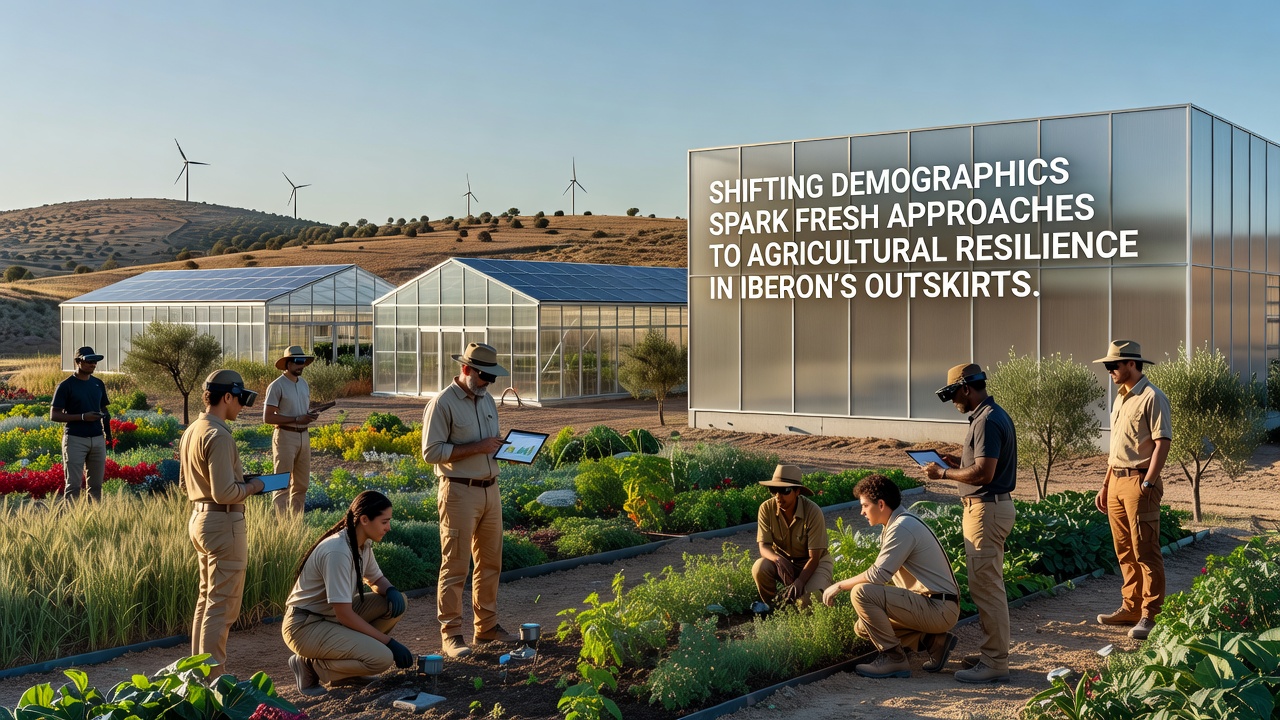
Training modules offered through vocational centers have incorporated modules on automated irrigation controllers and drone-based scouting, with enrollment figures showing increased participation from mid-career operators who are adapting inherited holdings. Evidence from pilot programs suggests these tools help offset labor shortages by enabling remote oversight of dispersed plots, particularly during peak seasonal windows.
Policy Frameworks and External Support
National rural development plans have allocated portions of existing agricultural budgets toward grants that prioritize collaborative infrastructure, such as shared cold-storage facilities and digital marketplace platforms. These measures draw on guidelines issued by EU agricultural directorates that encourage member regions to address demographic imbalances through targeted investment rather than direct subsidies alone. Cross-border exchanges with programs in other European territories have introduced techniques for multi-generational farm agreements, where retiring operators retain advisory roles while transferring operational control under formalized contracts. Data from monitoring reports indicate that uptake of these agreements has grown steadily since their introduction in regional pilot phases.
Looking Ahead at Integration and Outcomes
Continued monitoring through 2027 will track whether the combination of demographic data, technological adoption, and cooperative structures sustains output levels across Iberon's outskirts. Preliminary assessments from research networks suggest that areas with stronger inter-municipal coordination show faster recovery from seasonal disruptions, though variation remains high depending on soil type and market access. Observers continue to compile metrics on workforce composition and land-use efficiency to inform subsequent adjustments in support programs.
Conclusion
Demographic shifts have prompted measurable changes in agricultural practices across Iberon's outskirts, with evidence pointing to expanded use of shared resources, precision tools, and structured succession mechanisms. These developments reflect responses documented in official statistics and institutional reports rather than isolated experiments, positioning the region to maintain production capacity under evolving population conditions.