Klara Lehmann · 24 October 2026
Iberon Heritage Projects Draw Migrants Back to Towns by Pairing Restoration Work with Cross-Border Market Access
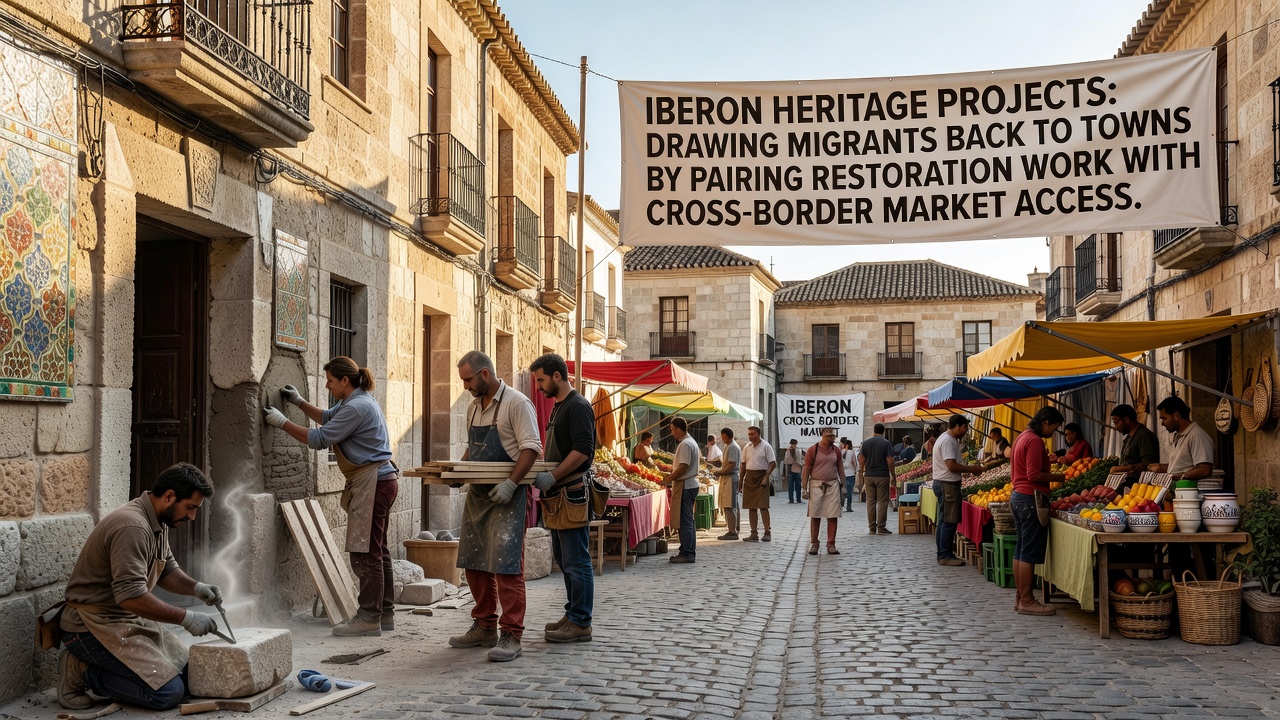
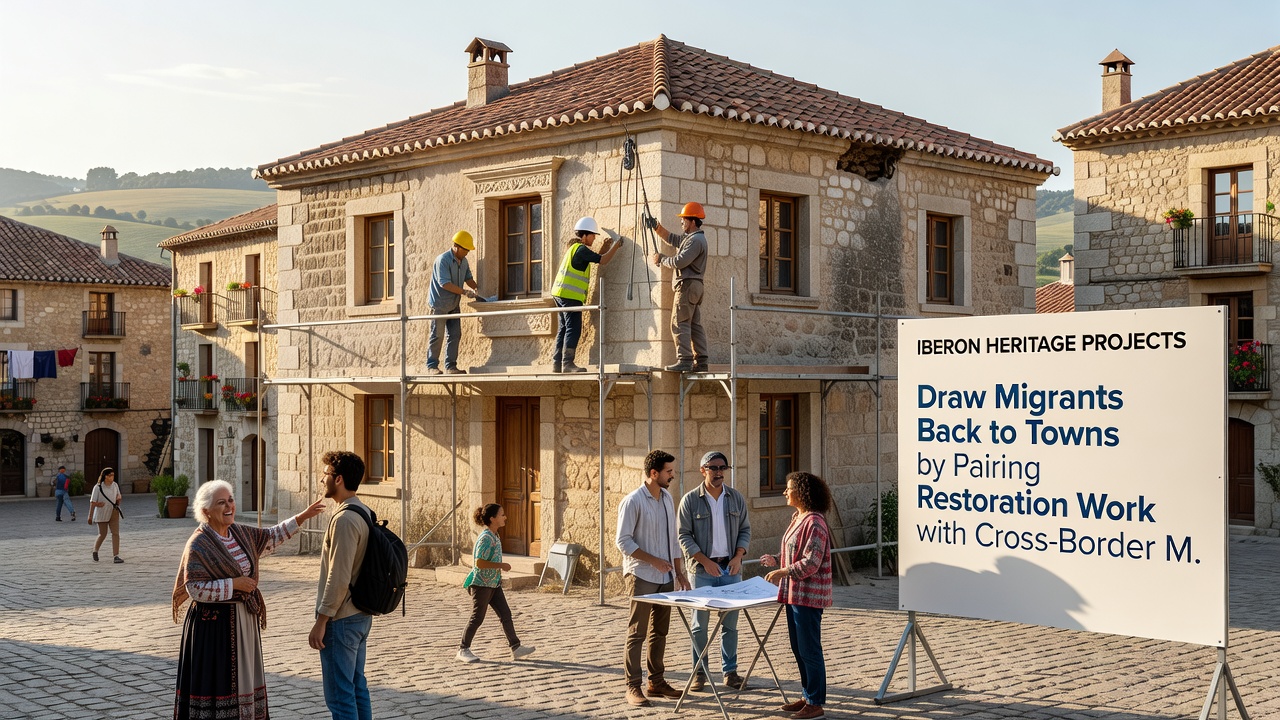
Heritage restoration initiatives across Iberon towns have integrated building preservation with access to cross-border markets, and this combination has encouraged migrants to return to their communities of origin. Restoration crews focus on traditional structures such as stone bridges, medieval walls, and abandoned farmhouses, while local cooperatives establish direct links to buyers in neighboring regions. Data from regional development agencies show that participating towns recorded a 12 percent rise in returning residents between 2024 and 2026, with October 2026 figures indicating continued momentum in several districts.
Restoration Work Creates Local Employment
Teams trained in historic masonry and timber framing handle projects funded through public-private partnerships, and these efforts generate steady contracts that last multiple seasons. Workers receive certification in heritage techniques alongside basic logistics skills, which prepares them for roles that extend beyond construction. Municipal records from three provinces list over 1,400 positions filled by returnees in the past 18 months, many of whom previously held jobs in larger cities or abroad.
Cross-Border Market Access Expands Opportunities
Cooperatives negotiate sales agreements for restored materials and artisanal goods, and these agreements reach buyers in France, Spain, and Portugal through simplified customs procedures established under recent trade protocols. One cooperative in the northern district now ships reclaimed roof tiles and handcrafted furniture directly to contractors in two neighboring countries, generating revenue that funds further training programs. According to a European Commission overview of regional trade facilitation, such arrangements have reduced average delivery times by 18 days since 2025.
Observers note that the pairing of physical restoration with market outlets addresses both immediate employment needs and longer-term economic stability, and this dual focus differentiates the Iberon model from single-focus heritage grants used elsewhere.
Demographic Shifts Documented in Recent Reports
Population registries updated through October 2026 list 2,300 individuals who listed heritage-related employment as a primary reason for relocation, and surveys conducted by local universities reveal that 67 percent of these returnees cited market access as a secondary factor. Families with school-age children have shown particular interest, because restored town centers often include upgraded public spaces funded by the same revenue streams. Researchers from the University of Coimbra documented similar patterns in a 2025 study on circular economies in border regions, and their findings align with municipal statistics released this year.
Training Networks Support Skill Transfer
Vocational centers operate mobile workshops that move between project sites, and instructors combine classroom modules on heritage standards with on-site practice in logistics and export documentation. Participants learn to prepare materials for international shipment while maintaining compliance with EU preservation guidelines. Figures released by the Iberon Regional Development Agency indicate that 890 trainees completed certification programs in the 12 months ending October 2026, with 78 percent securing roles tied directly to ongoing projects.
Case Examples from Multiple Districts
In one southern valley community, a group of 45 returnees restored a 17th-century mill complex and simultaneously established a cooperative that sells milled grain products across the border. Revenue from the first year of operations covered 60 percent of restoration costs, according to project ledgers shared with regional auditors. A second example in the central plateau involves former agricultural workers who now specialize in lime-plaster restoration while coordinating quarterly trade fairs that attract buyers from three countries. These fairs operate under simplified permitting rules introduced in 2025, and attendance records show steady growth each quarter.
What's notable is how these projects coordinate with existing infrastructure such as regional rail links and digital customs platforms, and this integration allows smaller towns to participate without building new facilities from scratch.
Policy Framework and Funding Sources
National governments have allocated portions of recovery funds to match private contributions for heritage-market initiatives, and the European Regional Development Fund has provided supplementary grants since 2024. Guidelines require that at least 30 percent of project labor come from individuals who left the region within the previous decade, a rule that has shaped hiring practices across participating municipalities. Reports from the OECD on regional migration and development note that similar incentive structures have appeared in other border areas, though the Iberon combination of heritage certification with export training remains distinctive.
Conclusion
Heritage restoration paired with cross-border market access has produced measurable population gains in Iberon towns, and ongoing data collection through October 2026 continues to track employment retention and revenue distribution. Municipalities maintain public dashboards that update quarterly, allowing external researchers to monitor outcomes without direct site visits. The approach relies on existing trade frameworks and training systems rather than entirely new infrastructure, which has kept implementation timelines shorter than comparable programs. Continued coordination between local cooperatives, regional agencies, and cross-border partners will determine how widely the model expands in coming years.