Katja Peters · 12 September 2026
How Transit Expansions Are Redefining Daily Routines in Outlying Settlements
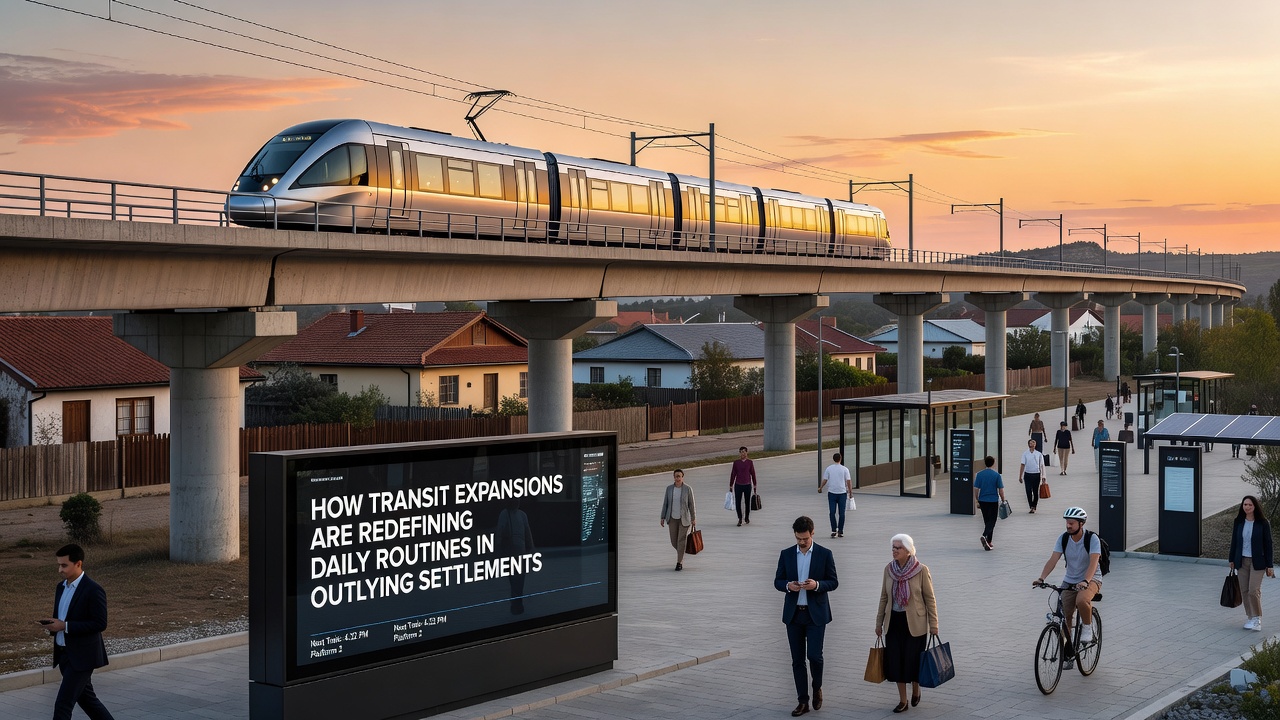
Transit expansions have altered movement patterns across outlying settlements where residents once relied on personal vehicles for most trips. New rail lines and bus rapid transit corridors now link these areas to city centers, and data from multiple regions show shifts in how people schedule their days. According to reports from the U.S. Department of Transportation, several metropolitan areas recorded measurable increases in public transit usage among suburban populations after system upgrades completed in recent years.
Commuters in these settlements often adjust wake-up times and meal preparations around fixed transit schedules rather than traffic conditions. Morning routines that previously included school drop-offs and solo drives now incorporate walks to stations or coordinated rideshares to reach stops. Evening returns allow for stops at new retail nodes that opened near transit hubs, changing the sequence of household errands.
Shifts in Commuting and Work Patterns
Research from Transport Canada indicates that extended rail services into peripheral communities reduced average one-way commute durations by up to 25 minutes in select corridors by 2025. Workers who previously departed before dawn to beat congestion now board trains at later hours while still arriving on time. This adjustment frees time for family breakfasts or brief exercise sessions before leaving home.
Employers in central districts report that staff from outlying areas arrive with greater consistency once multiple daily departures became available. Flexible work policies have aligned with these schedules in some cases, allowing employees to handle mid-day appointments near their workplaces before returning on evening services. Data collected through regional planning agencies show corresponding drops in single-occupancy vehicle miles traveled on parallel roadways.
Changes to Shopping, Education, and Leisure Activities
Access to frequent transit has influenced where residents complete daily tasks. Grocery stores and pharmacies located near new stations capture more foot traffic from outlying neighborhoods, while distant big-box retailers see fewer visits during weekdays. School districts note that older students use transit passes to reach after-school programs without parental shuttling, which alters afternoon logistics for many households.
Leisure patterns also evolve when weekend services extend into settlements. Families visit museums or parks in the core city without arranging parking or facing long drives home. Local governments in several Australian states documented rises in cultural event attendance from suburban postcodes following timetable expansions, according to figures released by the Bureau of Infrastructure and Transport Research Economics.
Community and Infrastructure Adjustments
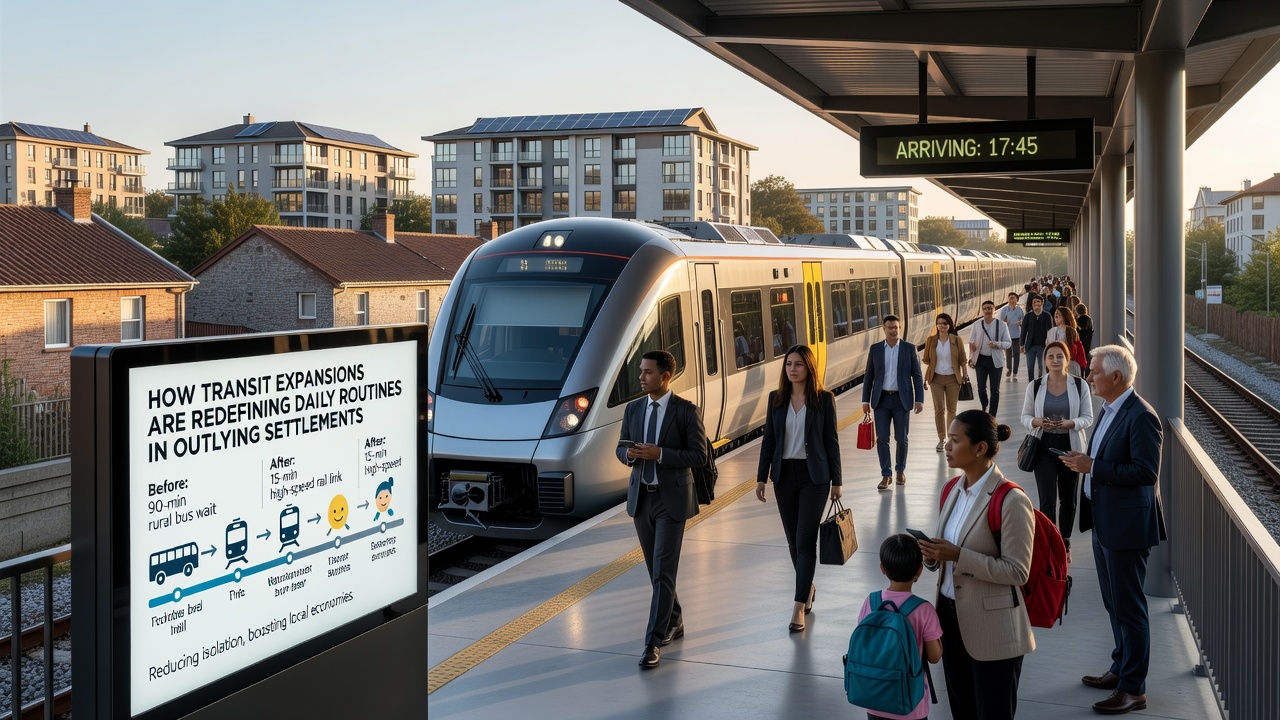
Local businesses adapt layouts and operating hours to match passenger flows at nearby stops. Cafés open earlier to serve riders waiting for the first trains, while fitness centers extend evening classes for those disembarking after 7 p.m. Property developers incorporate ground-floor retail and pedestrian plazas into station-adjacent projects to capture this foot traffic.
By September 2026 several North American agencies plan to activate additional feeder bus routes that will further integrate outlying neighborhoods with main lines. These connections are expected to reduce reliance on park-and-ride facilities and encourage more walking segments within daily routines. Planning documents emphasize coordinated signal timing and secure bicycle storage at terminals to support multimodal trips.
Health and Environmental Observations
Public health studies track increases in incidental physical activity among residents who walk or cycle to transit stops instead of driving the full distance. Air quality monitors near former congestion hotspots show modest improvements tied to fewer vehicles on the road during peak periods. Regional environmental agencies continue to collect data on these outcomes as networks expand.
Observers note that household budgets in connected settlements sometimes redirect funds previously spent on fuel and vehicle maintenance toward transit passes and local services. This reallocation appears in spending surveys compiled by statistical bureaus in multiple countries.
Conclusion
Transit expansions continue to reshape time allocation, travel sequences, and local commerce in outlying settlements through measurable changes in mobility options. Ongoing infrastructure additions scheduled through 2026 and beyond will likely extend these effects to additional communities as systems mature and integrate with surrounding land uses.